Our corten steel garden edging comes in 3.0m lengths and is available in 3 sizes:
1. Ex 100mm (H), 3000mm (L), 1.6mm (T)
Approx 3 kgs.
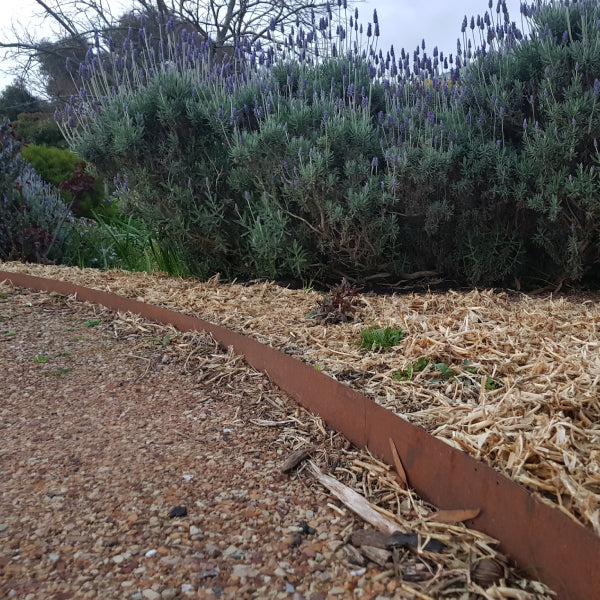
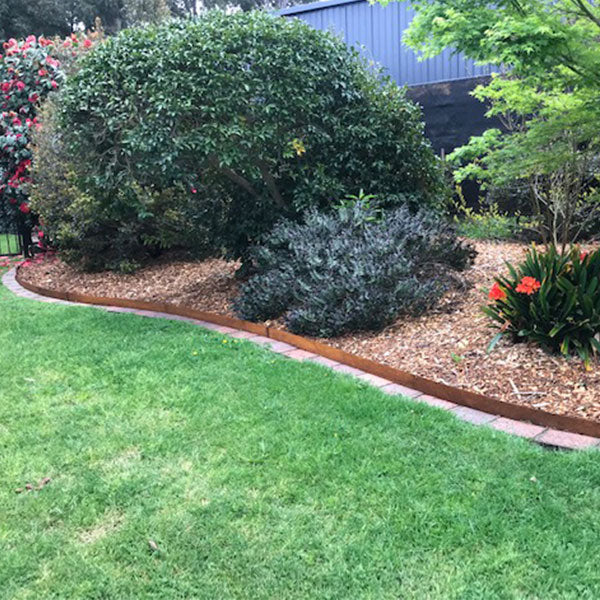
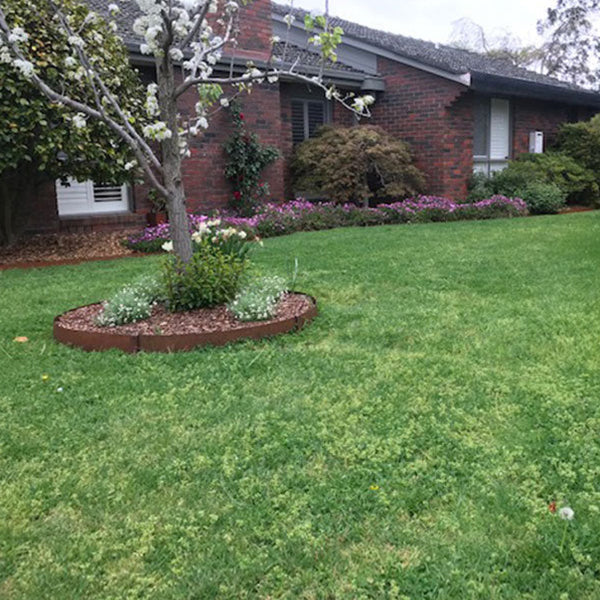
Best suited to:- Defining lawns, paths, gravel, mulch and separate garden areas without creating a pronounced raised edge
2. Ex 150mm (H), 3000mm (L), 1.6mm (T)
Approx 5 kgs.
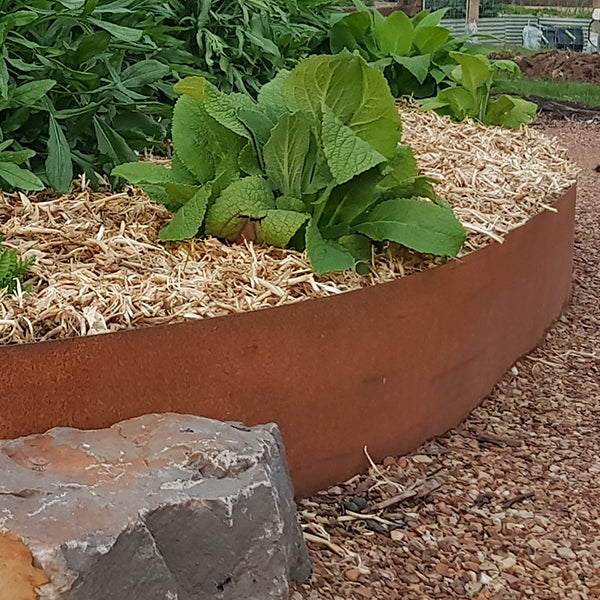
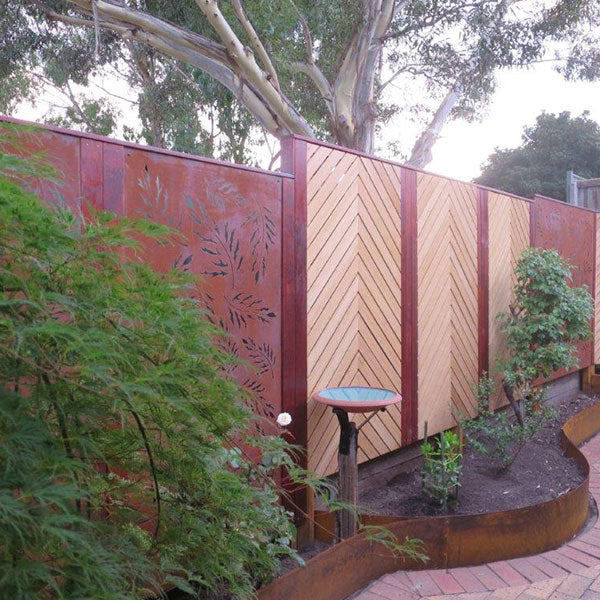
Best suited to:- More visible borders, raised garden beds and modest changes in garden level
3. Ex 300mm (H), 3000mm (L), 1.6mm (T)
Approx 10 kgs.
Best suited to:- Deeper beds, more definitive landscape features and sloping gardens where additional visible height is useful
Every Flat Edge length has pre-drilled holes at both ends. They are there to join one length to another, providing a clean overlap and consistent fixing points. For trade and DIY customers, the marked out joining holes makes it easy to install.
Which Height Should I Choose?
100 mm Flat Edge is the starting point for subtle garden definition. It works particularly well where the objective is simply to separate one area from another—lawn from a garden bed, gravel from mulch, or a path from surrounding soil—without turning the edge itself into a pronounced feature.
150 mm Flat Edge gives the border more presence. It is a good option for raised garden beds, more visible landscape lines and areas where a modest difference in garden level needs to be accommodated.
300 mm Flat Edge creates a more definitive landscape feature. It can be useful for deeper garden beds and sloping sites where more of the edging needs to remain visible.
The important limit is structural loading. Garden edging can manage garden definition and modest changes in level, but it is not a structural retaining wall. Where a project needs to retain substantial soil, manage pressure from a slope or support a structural load, use a properly designed retaining structure. Traditional sleepers can provide that structure and, where appearance matters, can be clad with one of Chippy’s screening products.
Visit our Clayton showroom to compare Flat Edge, Safe Edge and the relevant installation components.
Is 1.6mm Corten Edging thick enough?
Whilst a variety of thicknesses are available, the largest number is not necessarily the best product.
In practice, the right thickness depends on what the edging needs to do.
For everyday residential garden borders, 1.6 mm weathering steel provides a practical balance. It can hold a clean line, but it can also be carried, positioned and formed into curves without specialist equipment. That flexibility is part of the design.
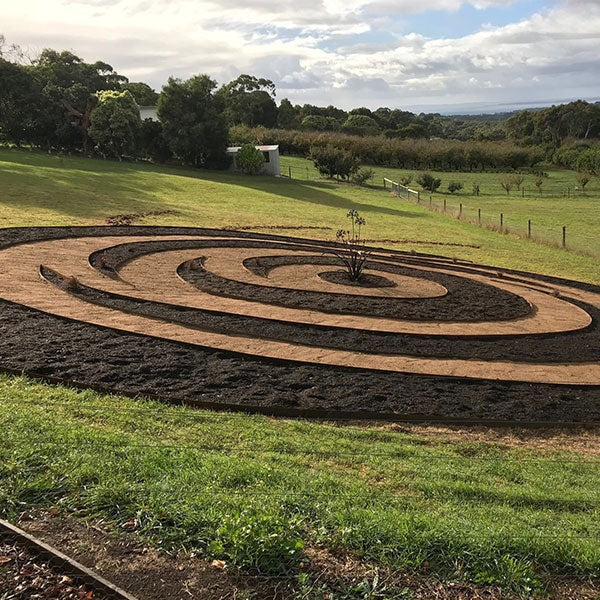
Curves naturally add rigidity to an installed length. On curved work, pegs are used not only to secure the steel but also to form and control the shape while the surrounding ground is finished.
Thicker steel can be useful where a project calls for greater rigidity, long uncompromising straight lines, commercial use or higher loads. It is not automatically the best choice for a residential garden, particularly where flexibility, manageable handling and DIY installation matter.
The edging system should suit the application.














Connect